The KybalionFull page
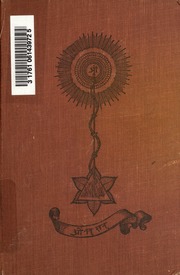
A concise study of the seven Hermetic principles said to underlie all esoteric philosophy, from Mentalism to Cause and Effect. Written anonymously in 1908, it remains the most popular gateway into Hermetic thought.
Timeless books, free forever. A hand-picked shelf of public-domain classics — read them online or download them to keep.
Every title on these shelves is in the public domain, or in the case of the military manuals a work of the United States federal government, which is not subject to copyright. Copyright expires. When it does, a book belongs to everybody: it can be copied, printed, quoted, translated and given away without anyone's permission and without a fee. The books here were published between the fifteenth century and the middle of the twentieth, and their terms have run out. We have not bought a licence, we are not paying a royalty, and we are not asking you for anything. Nothing on this page is pirated, and nothing is a sample of a longer paid version.
Each book gives you two routes. Read online opens the full text at the archive that scanned and transcribed it, usually Project Gutenberg, the Internet Archive or Sacred Texts. Those are the same sources a librarian would point you at, and we link straight to them rather than putting a copy behind our own reader. Download saves the file to your device so you can keep it, read it on a plane, or side-load it onto an e-reader. Downloads are served as EPUB where a clean digital text exists, and as PDF where the book only survives as a page scan, which is usually the case for the older herbals and the manuals with diagrams.
EPUB is the format Kobo, Apple Books, Google Play Books and most Android reading apps open directly, and it reflows to fit whatever screen you are on. A Kindle will take EPUB through Amazon's Send to Kindle page. PDF keeps the original page layout exactly as printed, which matters for illustrated plates and tables but makes for harder reading on a phone. Twelve of the better-known titles also have a full page here with background on the book, what it contains and why people still read it, linked from the title.
These are the books people actually search for, grouped into five shelves: hermetic and occult philosophy, Eastern and spiritual classics, New Thought and early self-help, survival and woodcraft, and historical natural medicine. They are presented as historical and literary documents. We do not endorse their claims, and the natural medicine shelf in particular carries a warning for good reason.
Esoteric philosophy, ceremonial magic, tarot and theosophy, from the Hermetic principles of the Kybalion to Frazer’s vast comparative study of myth and ritual. These are the primary sources the modern occult revival was built on, printed between the 1750s and the 1920s and long out of copyright.

A concise study of the seven Hermetic principles said to underlie all esoteric philosophy, from Mentalism to Cause and Effect. Written anonymously in 1908, it remains the most popular gateway into Hermetic thought.
Mead's landmark translation and commentary on the Hermetic writings attributed to Hermes Trismegistus. It gathers the philosophical dialogues that shaped Western mysticism, alchemy and Renaissance thought.

Perhaps the most comprehensive esoteric encyclopedia ever written, surveying alchemy, the Qabalah, Tarot, Masonry, Rosicrucianism and the mystery schools. Hall assembled this monumental work with more than 200 illustrations when he was just 27.
The foundational text of nineteenth-century occult revival, pairing magical doctrine with ceremonial ritual. Waite's English translation of Levi shaped nearly every Western magical tradition that followed.
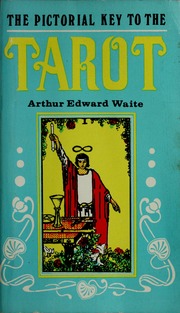
Waite's companion to the Rider-Waite-Smith deck, explaining the symbolism and divinatory meaning of all 78 cards. It is the single most influential book on modern Tarot reading.
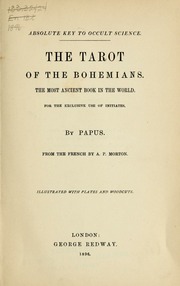
A systematic occult study linking the Tarot to the Qabalah, numbers and astrology. Papus presents the cards as an 'absolute key to occult science' rather than a mere fortune-telling device.
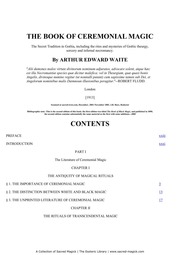
A critical survey of the classic grimoires, from the Key of Solomon to the Grimorium Verum. Waite examines the rituals of ceremonial magic with an analytical and often sceptical eye.
The most famous of the medieval grimoires, edited from British Museum manuscripts by the co-founder of the Golden Dawn. It details the pentacles, planetary hours and conjurations of classical ceremonial magic.
Blavatsky's first major work and a cornerstone of the Theosophical movement, contrasting ancient wisdom with modern science and religion. Volume one, 'Science', challenges the materialism of its age.
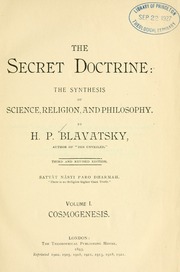
Blavatsky's synthesis of science, religion and philosophy, built around the enigmatic Stanzas of Dzyan. Volume one lays out an esoteric cosmology of cyclic evolution across vast ages.

A sweeping comparative study of myth, magic and religion across cultures, tracing the theme of the dying and reborn god. Frazer's classic reshaped anthropology and inspired generations of writers.

Budge's translation of the Papyrus of Ani, the funerary spells the ancient Egyptians used to guide the soul through the afterlife. It remains the best-known window into Egyptian religion and magic.

The first widely read English edition of the Bardo Thodol, describing the states of consciousness between death and rebirth. Evans-Wentz's 1927 translation introduced Tibetan Buddhist thought to the West.
The short, cryptic text Crowley claimed was dictated to him in Cairo, and the founding scripture of Thelema. Its central maxim, 'Do what thou wilt', became the seed of a whole modern magical current.
A dense set of tables mapping the correspondences of the Qabalah to gods, colours, plants, perfumes and more. It is the reference dictionary of ceremonial magic and comparative symbolism.
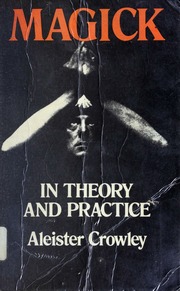
Crowley's systematic manual of magical theory, ritual and discipline, first printed for subscribers in Paris in 1929. It is his most complete statement of the philosophy and practice of Magick.
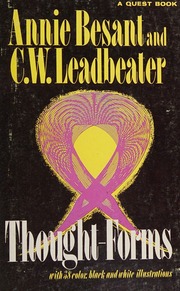
A Theosophical study claiming to depict the shapes and colours that thoughts and emotions take in subtle matter. Its vivid colour plates influenced early abstract art.
A Theosophical manual mapping the astral world, its inhabitants and its phenomena. Leadbeater presents it as a practical guide to the plane experienced in dreams and after death.
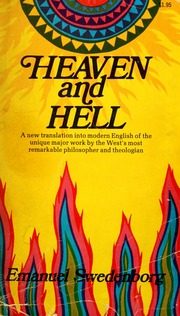
Swedenborg's detailed account of the afterlife, drawn from what he described as direct visionary experience. It portrays heaven and hell as reflections of each soul's inner state.
A survey of number symbolism drawn from the Pythagoreans, the Qabalah and world religion. Westcott, a founder of the Golden Dawn, distils centuries of numerological lore.
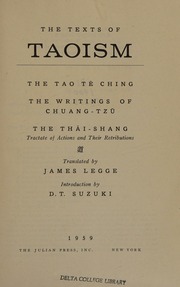
Foundational texts of Eastern thought and the Western contemplative tradition side by side: the Tao Te Ching, the Bhagavad Gita, the Upanishads and the Dhammapada in their classic public-domain translations, along with Stoic handbooks and studies of religious experience.

The foundational text of Taoism, eighty-one short chapters on the Way, simplicity and effortless action. Legge's scholarly translation is one of the classic English versions.

The dialogue between Prince Arjuna and Krishna on duty, action and the eternal self, set on the eve of battle. Arnold's flowing verse translation made the Gita beloved in the English-speaking world.

A selection of the ancient Vedantic scriptures on the nature of the self and ultimate reality. Paramananda's clear translation opens the philosophical heart of Hinduism to general readers.

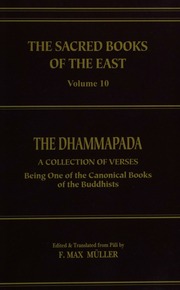
A collection of verses attributed to the Buddha, distilling the path of ethics, mindfulness and liberation. One of the most widely read of all Buddhist texts.

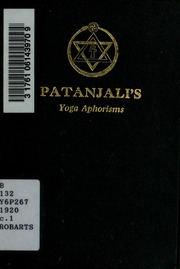
The classical aphorisms that define the eight limbs of yoga and the discipline of the mind. Johnston's 1912 rendering reads the sutras as a practical guide to inner awakening.

Vivekananda's lectures on the yoga of meditation and mind control, with a commentary on Patanjali's aphorisms. The book helped introduce yoga philosophy to a Western audience.

Yogananda's account of his life, gurus and spiritual encounters that brought Kriya Yoga to the West. A spiritual classic whose 1946 first edition entered the public domain when its copyright lapsed.

Twenty-six poetic essays on love, work, freedom and death, spoken by a departing prophet to the people of a city. One of the best-loved spiritual books of the twentieth century.

The private Stoic reflections of a Roman emperor on duty, mortality and living according to nature. Written for himself, it has become a timeless manual for a steady mind.

A compact handbook of Stoic ethics teaching the difference between what we can and cannot control. Its practical wisdom has guided readers seeking calm for nearly two thousand years.

A medieval devotional on humility, interior life and the following of Christ. After the Bible it became the most widely read Christian book in the world.

James's pioneering psychological study of conversion, mysticism and the religious life, drawn from first-hand testimonies. A founding work of the modern study of spirituality.

A study of illuminated states of mind, tracing 'cosmic consciousness' through figures from the Buddha to Walt Whitman. Bucke argues that a higher form of awareness is slowly evolving in humanity.
The New Thought and early self-help writers who shaped every motivational book written since. Short, direct and readable, most of them under a hundred pages, and the originals rather than the modern repackagings.

A short, influential essay arguing that character and circumstance grow from the thoughts we hold. This little book is a cornerstone of the entire self-help genre.

A practical New Thought guide to prosperity through a 'certain way' of thinking and acting. It later inspired much of the modern law-of-attraction literature.

A twenty-four part course in concentration, visualization and the creative power of thought. Originally sold as a correspondence program, it became a classic of practical mind training.

A friendly New Thought handbook on affirmations, faith and the spoken word as tools for a better life. Shinn's warm, story-driven style has kept it in print for a century.

Hill's original sixteen-lesson course on achievement, drawn from interviews with the industrialists of his day. It is the fuller predecessor to his famous 'Think and Grow Rich'.

A famous lecture urging readers to find opportunity in their own back yard rather than chasing it afar. Conwell delivered it thousands of times to fund a university.

Emerson's landmark essays on self-reliance, compensation, friendship and the over-soul. 'Self-Reliance' remains one of the defining statements of American individualism.

A collection of essays by one of the early leaders of the New Thought movement, on the creative force of the mind. Mulford argues that our thoughts are real forces shaping health and fortune.

A practical manual of exercises for developing focus, willpower and mental discipline. Written under a pen name of William Walker Atkinson, it is a staple of concentration training.

A bestselling New Thought classic on aligning the individual life with the infinite source of peace and power. Trine's optimistic spirituality influenced figures from Henry Ford onward.

A series of short, bracing essays on poise, self-control and inner strength. Jordan writes that calmness is a form of power available to anyone who cultivates it.
Practical field manuals and woodcraft classics: army survival and first aid instruction, and the camping literature that taught generations how to live out of a pack. Historical documents, useful as reference and as reading, but not a substitute for current training.

The U.S. Army's field manual on staying alive in any environment: shelter, water, fire, food, navigation and first aid. As a work of the U.S. government it is in the public domain.

The wartime U.S. Army first-aid manual covering wounds, fractures, burns and field emergencies. A public-domain government document written for use when no medic is near.

A classic handbook for campers and wilderness travelers, covering outfits, camp-making, cooking and backcountry craft. Kephart's practical knowledge made it a bushcraft standard.

A short, spirited guide to light-weight camping and canoe travel by the pioneer of 'going light'. Nessmuk's plainspoken advice still resonates with modern minimalist campers.

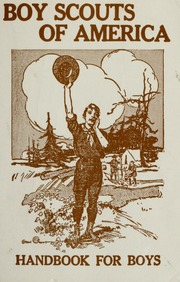
The original 1911 scouting manual on woodcraft, first aid, signalling, camping and outdoor skills. A charming period snapshot of practical self-reliance for young people.
Historical herbals and dispensatories preserved for reference and cultural interest. They record what practitioners believed and prescribed in their own day. They are not medical advice, and many of the remedies they describe are now known to be ineffective or unsafe.

The famous seventeenth-century English herbal listing hundreds of plants with their traditional uses and astrological associations. A landmark historical document of early herbalism.

The great reference work of nineteenth-century Eclectic medicine, describing hundreds of botanical remedies in exhaustive detail. A historical cornerstone of American herbal pharmacy.

Felter's summary of Eclectic pharmacology and therapeutics, one of the last major works of that medical school. A historical record of pre-modern botanical medicine.

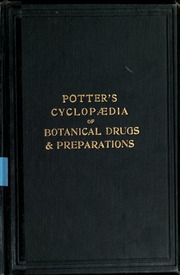
An alphabetical reference of medicinal plants and their historical preparations, widely used by early pharmacists. Included here strictly as a document of its era.